
Hammam Nur al-Din al-Shahid: A Timeless Journey into the Heart of Old Damascus
When you step into the Old City of Damascus, the air changes. The scent of roasted coffee blends with the earthy aroma of dried herbs and spices from the Al-Buzuriyah Souq. But among the bustling shops, there is a hidden sanctuary of steam and stone that has stood the test of time for nearly nine centuries: Hammam Nur al-Din al-Shahid.
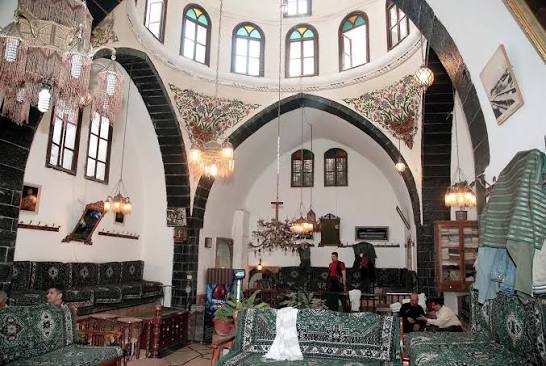
What to expect?
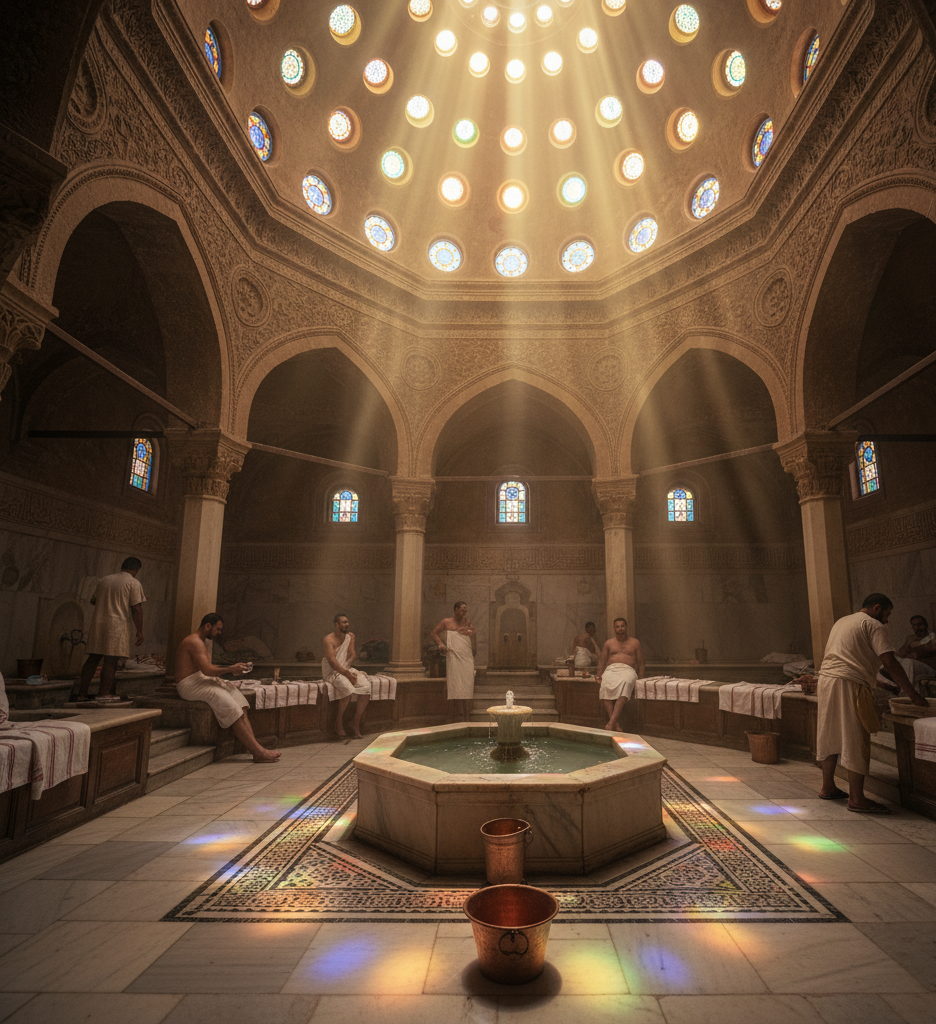
Hammam Nur al-Din al-Shahid. This is not just a public bath; it is a living museum, a social hub, and a testament to the sophisticated urban life of medieval Syria.
In this guide, we invite you to explore the depths of this architectural masterpiece and discover why a visit to this hammam is an essential part of the authentic Syrian experience.
A Legacy Carved in Stone: The History
The story of the hammam begins in the 12th century, specifically around 1167 AD. It was commissioned by the Great Sultan Nur al-Din al-Shahid, the predecessor of Saladin and a ruler known for his piety and dedication to public welfare. During that era, hammams were not a luxury but a fundamental part of the city’s infrastructure, serving both hygiene and religious purification needs.
Hammam Nur al-Din is one of the oldest functioning baths in the world. While many other structures fell to earthquakes or urban renewal, this hammam was meticulously preserved. In the late 20th century, it underwent a major restoration to ensure that its intricate carvings and structural integrity remained intact for future generations.
The Heart of the City: Location
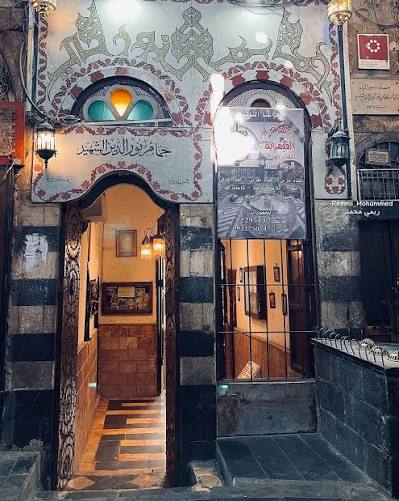
Finding Hammam Nur al-Din is half the fun. It is strategically located in the Al-Buzuriyah Souq, just a short walk south of the Umayyad Mosque. Its entrance is modest, often framed by the vibrant displays of nearby spice merchants. The location reflects the traditional Islamic city planning, where the bathhouse is placed near the main markets and the grand mosque, allowing merchants, travelers, and locals easy access to spiritual and physical cleansing.
The Architectural Soul: Sections of the Hammam
The genius of the Damascus hammam lies in its thermal transition. The layout is designed to move the bather gradually from the cool outside air to the intense heat of the steam rooms.
1. The Al-Barrani (The Cold Room/Reception)
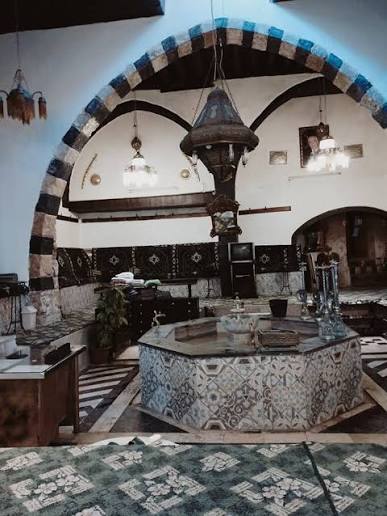
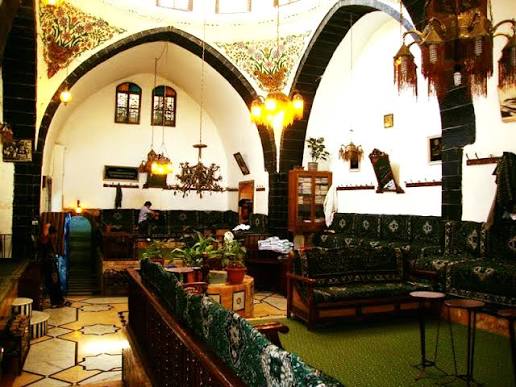
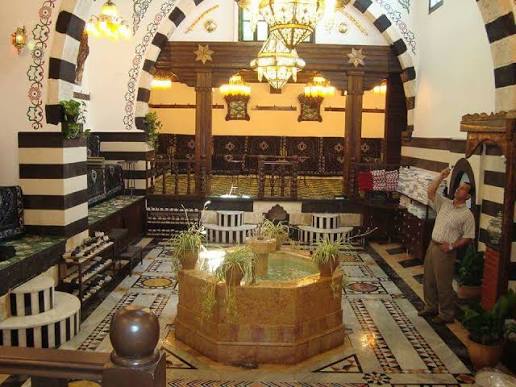
This is the most visually stunning part of the hammam. It is a vast, high-ceilinged hall crowned by a magnificent dome. Here, you will find a central marble fountain (the Bahra) surrounded by raised wooden benches (the Mastaba). This is the "Social Zone" where guests relax before and after their bath, sip on Damascene tea, and engage in conversation.
2. The Al-Wastani (The Warm Room)
Moving deeper, you enter the warm zone. The temperature rises slightly to prepare your body for the heat. This area is characterized by smaller domes with glass "bullseye" windows that filter soft, natural light into the humid space, creating an ethereal atmosphere.
3. The Al-Juwwani (The Hot Room)
This is the "Engine Room" of the hammam. It contains the steam vents and the Beit al-Nar (Fire House) where the water is heated. Here, you will find marble basins and the Sakhra (the central heated stone massage platform). The heat opens the pores, and the humidity begins the detoxification process.
The Authentic Ritual: Phases of the Bath
A visit to Hammam Nur al-Din is not a quick shower; it is a ritualized process that usually takes about two hours.
• The Sweating Phase: You spend time in the Juwwani (Hot Room) to let the steam soften your skin and relax your muscles.
• The Scrubbing (Takiis): A professional Mukayis (attendant) uses a Kessa (a rough loofah) to exfoliate your skin. You will be amazed—and perhaps slightly shocked—at how much dead skin is removed, leaving you feeling incredibly smooth.
• The Soap Massage: Following the scrub, you are covered in a cloud of olive oil soap suds. The attendant performs a vigorous massage that works out the tension in your joints.
• The Rinsing: You are washed with warm water from traditional copper bowls, followed by a final splash of cool water to close the pores.
• The Cool Down: You return to the Barrani, wrapped in multiple layers of thick cotton towels. Here, you rest, enjoy a drink, and let your body temperature return to normal.
The Groom’s Bath: A Syrian Celebration
One of the most beautiful traditions associated with Hammam Nur al-Din is the "Hammam al-Aris" (The Groom’s Bath). In Syrian culture, the wedding celebrations begin at the hammam.
On the morning of the wedding, the groom’s friends and family "kidnap" him and take him to the bath. The hammam is filled with the sound of Zaghrouta (ululations), traditional Damascene chants, and the rhythmic beating of the Darbuka drum. It is a rite of passage where the groom is pampered and celebrated before he officially begins his married life. For a visitor, witnessing or participating in a groom’s bath is a rare glimpse into the deep-seated joy and communal spirit of Syrian people.
What Makes This Hammam Unique?
While there are many baths in the Middle East, Hammam Nur al-Din al-Shahid holds a special status for several reasons:
• Authenticity: It hasn’t been "Disney-fied." It still uses traditional heating methods and retains its original marble floors and stone walls.
• The Light: The way the sunlight pierces through the dome's glass openings into the steam is a photographer’s dream (though you should always respect the privacy of others).
• The Social Fabric: It remains a place where people from all walks of life—from laborers to wealthy businessmen—sit side by side on the same benches, reflecting the egalitarian nature of the bath.
Tips for Your Visit
• Check the Timing: Hammams usually have separate hours for men and women. Historically, Nur al-Din was primarily for men, but schedules can change, so check with your guide or the Yalla-Syria team for current timings.
• Bring Nothing but Yourself: The hammam provides everything: towels, soap, slippers, and a loofah (though you can bring your own if you prefer).
• Hydrate: Drinking a lot of water after the session is crucial, as you will lose a lot of fluids in the steam room.
Conclusion
Hammam Nur al-Din al-Shahid is more than a place to get clean; it is a bridge to the past. It offers a sensory experience that no modern spa can replicate. Between its ancient walls, you don’t just wash away the dust of the city; you soak in the history of Damascus itself.
Whether you are seeking relaxation, a cultural deep-dive, or simply want to feel the weight of centuries-old tradition, this hammam is a destination that will stay in your memory long after you’ve left the shores of Syria.
Reviews & Ratings
0.0
★★★★★
0 reviews
💬
No reviews yet. Be the first to review!
Opening Hours
mondayToday
gotuesday
Closedwednesday
Closedthursday
Closedfriday
Closedsaturday
Closedsunday
ClosedAccepted Payments
💵Cash
Contact & Location
near Al-Jamee Alamawi
Damascus
Activity
43
Views
6
Likes
📍 Location

Hammam Nur al-Din al-Shahid: A Timeless Journey into the Heart of Old Damascus
Similar Places
The Saint’s Path: A Sacred Journey from Damascus to Maaloula and Sednaya
Damascus
New
Historical SitesThe Mariamite Cathedral of Damascus: A Timeless Beacon of Faith in Old Syria
Damascus
New
Cultural
Top 5 Historic Bathhouses in Damascus: The Ultimate Hammam Guide
Damascus
New
Cultural
Discover Maaloula, Syria: A Journey to the Ancient Cliffside Sanctuary of Living History
Damascus
New
Cultural
A 3-Day Syria Travel Itinerary for Damascus & Beyond
Damascus
New
CulturalAl-Zaitoun Church : The Sacred Heart of Ancient Damascus
Damascus
New
Historical SitesMore in Damascus
A Culinary Journey at Naranj Restaurant Damascus
Damascus
New
Restaurants.jpeg&w=1200&q=75)
Escape to Nature: The Ultimate Day Trip to Bloudan, Zabadani, and Madaya
Damascus
New
Suggested Itineraries.webp&w=1200&q=75)
Unveiling the Pearl of the Desert: A 3-Day Palmyra Syria Travel Guide
Homs
New
Suggested Itineraries.webp&w=1200&q=75)
Syria 3-Day Tour: From Mashta Al-Helou & Al-Kafroun to Tartous & Arwad
Tartus
New
Suggested Itineraries.jpeg&w=1200&q=75)
The Ultimate 3-Day Latakia Travel Itinerary: From Damascus to the Coast
Damascus
New
Suggested Itineraries.jpeg&w=1200&q=75)
The Ultimate 3-Day Aleppo Itinerary: From Damascus to Syria’s Cultural Heart
Hama
New
Suggested ItinerariesMore Historical Sites Places
The Saint’s Path: A Sacred Journey from Damascus to Maaloula and Sednaya
Damascus
New
Historical SitesThe Mariamite Cathedral of Damascus: A Timeless Beacon of Faith in Old Syria
Damascus
New
Cultural
10 Historical Sites You Must Visit in Syria: A Journey Through Time
Syria
New
Historical Sites
Al-Kahf Castle: The Ancient Rock Fortress of Tartus, Syria
Tartus
New
Historical Sites
Discovering Shahba Syria: Ancient Ruins, Timeless History, and Mountain Magic in Philippopolis
As-Suwayda
New
Historical Sites
The Magic of Saint Simeon Stylite Church: Syria’s Ancient Wonder
Idlib
New
Cultural